 By admin
 For many, a quick spritz of perfume on the neck is an ingrained part of the morning ritual. It’s a simple act that leaves you feeling polished, confident, and enveloped in your favorite aroma. The allure of a lingering scent, close to the skin, is undeniable. Yet, what if this seemingly harmless daily habit could be silently introducing more than just a pleasant fragrance into your system?
Leading health organizations, including the Environmental Working Group (EWG), have shed light on a concerning reality: a significant number of popular fragrances contain synthetic chemicals. Among these are compounds like phthalates and specific musks, widely recognized as endocrine-disrupting chemicals (EDCs). These substances possess the potential to interfere with the body’s delicate hormonal balance over time. Given the neck’s uniquely thin and vascular skin, it presents an easy pathway for these chemicals to be absorbed, particularly in close proximity to the vital thyroid gland. While a single application isn’t a cause for alarm, consistent, repeated exposure prompts important questions regarding the cumulative impact on your hormonal equilibrium and overall metabolic health. The encouraging news is that you don’t need to abandon your beloved signature scent altogether. Thoughtful adjustments to how and where you apply your perfume can significantly minimize direct exposure and support your long-term well-being.
Understanding the Concern: Decoding Endocrine-Disrupting Chemicals in Your Fragrance
At the heart of this discussion are Endocrine-Disrupting Chemicals (EDCs). These are foreign substances capable of mimicking, obstructing, or otherwise disrupting the delicate functions of your body’s natural hormones. Within the vast world of perfumes and numerous other scented items, two particular types of EDCs frequently appear: phthalates and synthetic musks.
- Phthalates: Often added to fragrances, these compounds serve to stabilize scent molecules, ensuring your perfume’s aroma endures for longer periods.
- Synthetic Musks: These provide the rich, enduring base notes that are a signature of many popular perfumes, contributing to their perceived depth and longevity.
Numerous research initiatives and scientific publications, notably those spearheaded by the Environmental Working Group (EWG), have pinpointed these substances as potential EDCs. Their presence raises questions about their capacity to influence various hormonal pathways, critically including those managed by the thyroid gland.
Positioned strategically at the base of your throat, the thyroid gland is a crucial endocrine organ. It is responsible for synthesizing hormones vital for regulating a multitude of bodily processes, such as metabolism, energy production, and maintaining optimal body temperature. What makes the neck area particularly susceptible is its unique dermatological characteristics: the skin here is considerably thinner and boasts a higher density of blood vessels compared to other regions like your forearms or thighs. This anatomical feature means that chemicals applied to the neck can be absorbed into the bloodstream with greater ease and speed.
Consequently, years of consistent, daily application in this sensitive zone could potentially contribute to subtle, yet significant, alterations in the overall functioning of the endocrine system. While health professionals underscore that the precise impact is highly individual – varying based on personal exposure levels, genetic predispositions, and broader lifestyle factors – the cumulative nature of these interactions warrants careful consideration.
Beyond Scent Diffusion: Why Your Neck Requires Special Attention
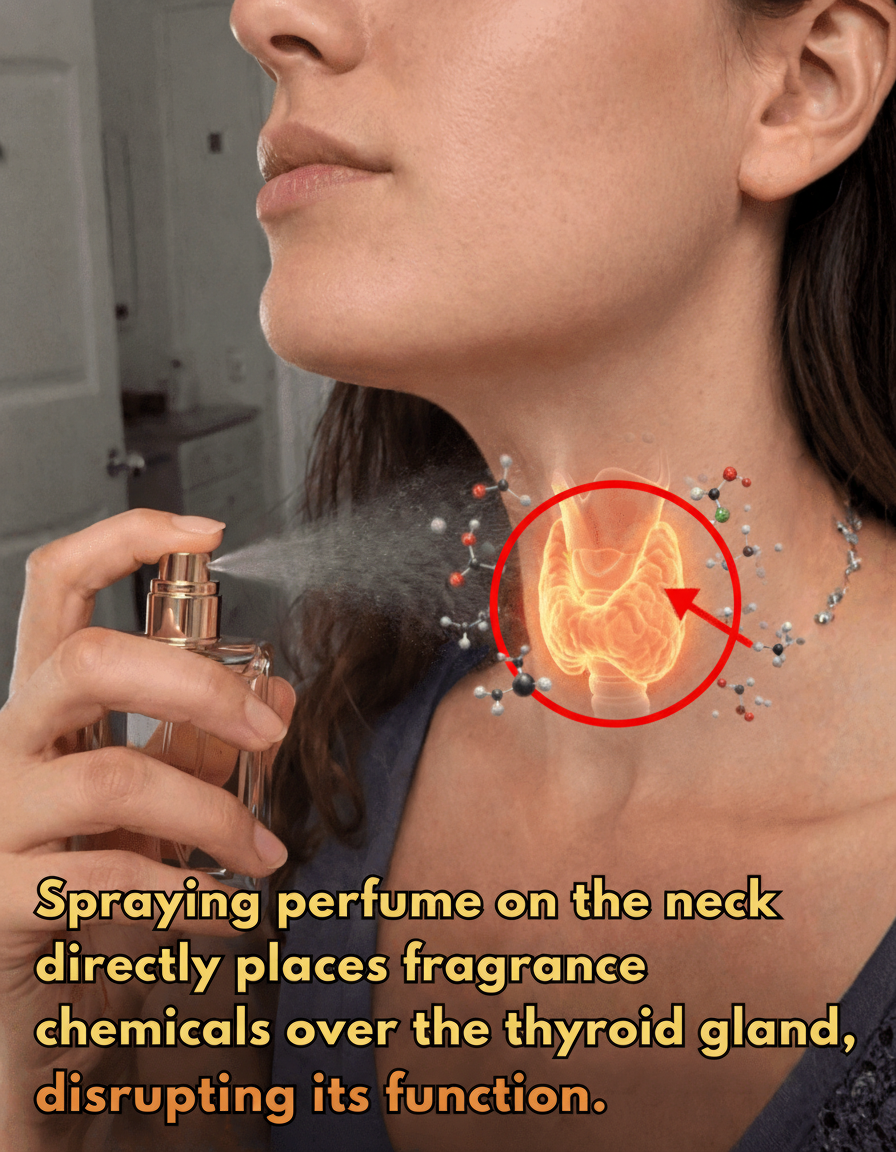
Pause for a moment and consider your daily fragrance application. It’s a common practice to target pulse points, such as the neck, with perfume. The logic is sound: the natural warmth of these areas effectively diffuses the scent, allowing it to blossom beautifully throughout the day. While undeniably effective for fragrance projection, this habit inadvertently positions a concentration of fragrance molecules directly over a highly hormone-sensitive gland – your thyroid.
Several physiological factors make the neck an area deserving of enhanced caution:
- Reduced Skin Barrier: The skin on your neck is notably thinner than that on other common application sites, like your wrists or the back of your knees. This reduced barrier allows for significantly greater absorption and penetration of applied substances.
- Elevated Vascularity: Characterized by a rich network of blood vessels, the neck facilitates rapid uptake. Increased blood flow in this region means that chemicals entering through the skin are quickly dispersed into the systemic circulation.
- Direct Thyroid Proximity: Spraying perfume directly onto the neck places EDCs and other fragrance compounds in immediate vicinity to the thyroid gland. This direct application heightens the likelihood of both localized and widespread exposure to these potentially disruptive chemicals.
Emerging research indicates that prolonged, low-level exposure to specific EDCs might contribute to various thyroid-related issues. However, it’s crucial to note that further extensive studies are still necessary to fully elucidate the specific risks for each individual. The consensus among health professionals is clear: adopting a proactive approach by minimizing direct, unnecessary contact with such sensitive bodily areas represents a pragmatic and beneficial step towards bolstering your overall health and wellness.
The excellent news is that embracing these insights doesn’t mean forsaking your favorite scents. Instead, it invites a more mindful approach, allowing you to continue enjoying fragrances by making simple, yet impactful, adjustments.
Smarter Scent Strategies: Actionable Tips for Reduced Exposure
The good news is that integrating these insights into your routine doesn’t require a complete overhaul. Instead, a few mindful adjustments to your fragrance application can significantly reduce direct skin absorption, particularly in hormone-sensitive areas. Here are practical ways to enjoy your favorite scents with greater awareness:
- Redirect Your Application Zones: Instead of the neck, consider pulse points located further away. Excellent alternatives include the inner wrists, the subtle warmth behind the ears (use sparingly), or the crook of your elbows. These areas naturally radiate warmth, effectively diffusing your chosen scent throughout the day without direct proximity to the thyroid.
- Embrace Fabric as a Fragrance Buffer: A simple yet effective technique is to mist your perfume lightly onto your clothing, a favorite scarf, or even your hair. This method allows the fragrance to subtly evaporate and linger without the need for direct, prolonged contact with your skin.
- Rediscover the Power of Behind-the-Knees: This age-old perfumer’s secret is highly effective. The warmth generated behind the knees helps to gently release the scent upwards as you move, and crucially, the skin in this region is considerably thicker, offering a better barrier against absorption.
- Master the Art of the Distance Spray: For a lighter, more ethereal application, hold your perfume bottle 6 to 8 inches away and mist into a fine cloud, then walk into it. Alternatively, explore specialized hair mists, which are formulated to scent your hair without heavy chemical contact on the skin.
- Prioritize Cleaner Fragrance Choices: Actively seek out perfumes and scented products explicitly labeled as “phthalate-free,” “paraben-free,” or “fragrance-free” (if you prefer natural essential oil scents). Brands committed to transparency often provide clear lists of ingredients they exclude, empowering you to make informed decisions for your health.
Implementing these small but impactful changes takes mere moments from your day. Yet, collectively, they contribute significantly to lowering your cumulative exposure to potentially harmful chemicals over the long term, safeguarding your well-being without sacrificing the pleasure of fragrance.