 By admin
 Witnessing a family member grapple with declining memory or cognitive impairments is profoundly distressing. It often triggers concerns about their autonomy, the erosion of precious memories, and an uncertain future. When conventional medical strategies offer limited solutions, many families actively seek alternative lifestyle interventions to bolster brain function. This article delves into the compelling experience of one couple who investigated a straightforward dietary supplement – coconut oil – and how their journey ignited widespread interest in novel energy sources for the brain. Could an everyday cooking ingredient hold the key to supplying the brain with vital alternative fuel? Join us as we uncover the specifics of this impactful real-life account, the scientific principles underpinning it, and valuable takeaways for anyone exploring brain-optimizing practices.
The Compelling Story of Dr. Mary Newport and Her Husband, Steve
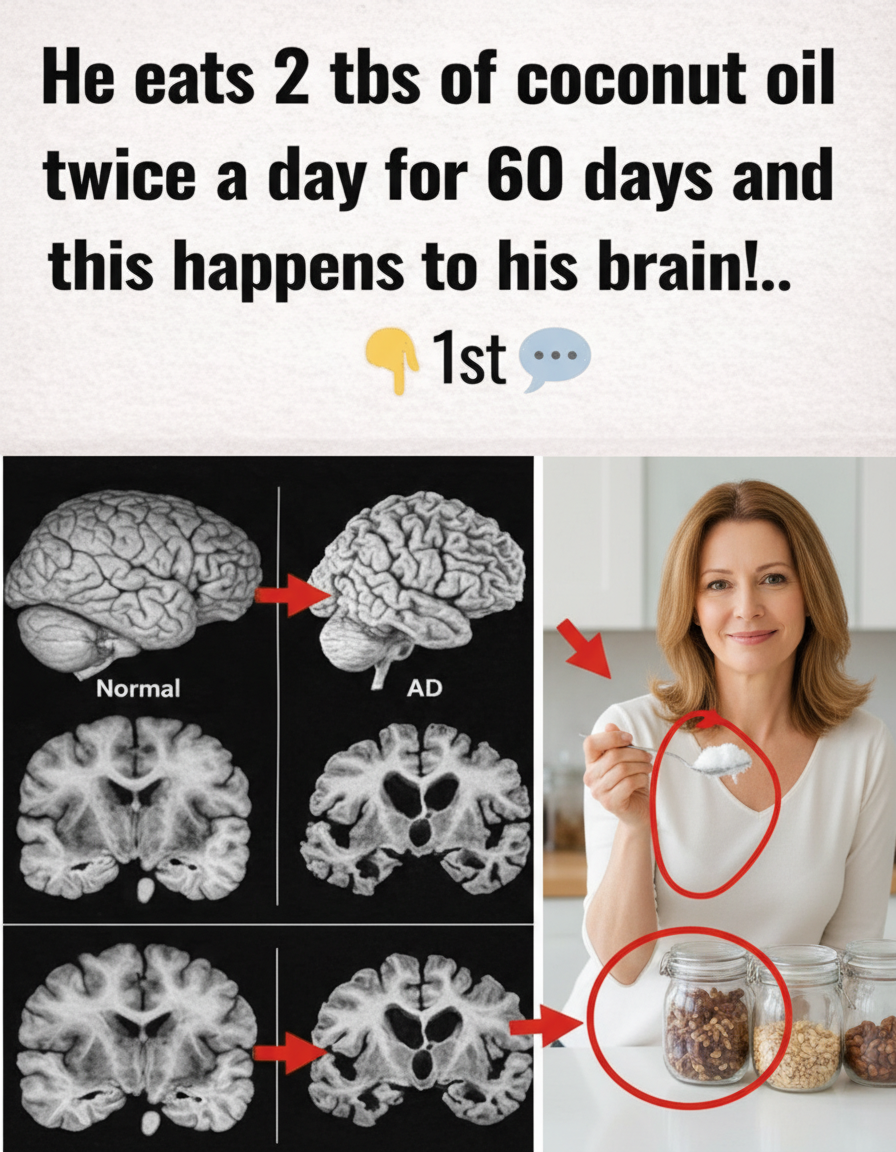
Dr. Mary Newport, a dedicated pediatrician, experienced firsthand the harrowing progression of early-onset Alzheimer’s in her husband, Steve, who was diagnosed in his early fifties. Following several years of distressing symptoms, an MRI scan conclusively confirmed his condition. Steve grappled with profound short-term memory deficits, became disoriented during routine activities such as locating kitchen tools or fetching water, exhibited erratic awareness, and developed physical manifestations like tremors and an unstable gait. Conventional medications provided minimal alleviation, and his emotional state deteriorated alongside significant weight loss. Driven by an unwavering resolve to assist him, Dr. Newport immersed herself in exploring clinical trials and unconventional therapies. Her research led her to AC-1202 (subsequently marketed as Ketasyn), a compound under investigation for its capacity to enhance cognitive stability in certain individuals with Alzheimer’s. The active component was Medium-Chain Triglycerides (MCTs) – specialized fats readily metabolized by the body into ketones. Crucially, MCTs are abundantly present in coconut oil. This pivotal discovery prompted Dr. Newport to integrate approximately two tablespoons of coconut oil into Steve’s diet twice daily, commencing around 2008.
In the ensuing months, Steve began to exhibit remarkable improvements: heightened alertness, an uplifted mood, increased participation in discussions, diminished tremors, and a rekindled enthusiasm for physical pursuits such as walking and jogging. Astonishingly, he even recovered the capacity to read and identify extended family members – transformations that infused their lives with renewed optimism and happiness. While this wasn’t a complete reversal to his pre-illness condition, these positive developments persisted, leading Dr. Newport to observe the continued supportive potential of this intervention. However, this uplifting narrative is intimately linked to a deeper biological mechanism: how the brain acquires its essential energy.
The Brain’s Vital Energy Needs: Understanding Fuel Shortages
The brain stands as one of the body’s most energy-intensive organs, consuming between 20-30% of the total energy expenditure (and sometimes up to 60% of available glucose, underscoring its metabolic priority). Typically, it depends primarily on glucose derived from carbohydrates for its fuel. Yet, in neurodegenerative conditions such as Alzheimer’s disease, brain cells can experience “hypometabolism” – a diminished capacity to efficiently utilize glucose, frequently associated with insulin resistance within the brain. This critical energy deficit is a significant factor contributing to the progressive cognitive decline observed over time.
This is precisely where ketones become crucial. Ketones are naturally occurring compounds produced when the body metabolizes fats for energy, a process typically observed during periods of fasting or adherence to very low-carbohydrate diets. These molecules possess the unique ability to traverse the blood-brain barrier, offering an invaluable alternative fuel source that can potentially circumvent the challenges associated with impaired glucose utilization. A key insight is that even brain cells struggling to process glucose might still efficiently harness ketones. Emerging research indicates that ketones may confer significant neuroprotective advantages, fostering cellular resilience and mitigating various forms of neurological stress.
Medium-chain triglycerides (MCTs), which are plentiful in coconut oil, possess a distinctive structure: they are shorter-chain fatty acids (typically 6-12 carbon atoms, compared to 14-18 in most dietary fats). This structural difference allows the liver to convert them into ketones with remarkable speed – often within a few hours – without requiring extended periods of fasting. This efficient metabolic pathway has ignited considerable scientific curiosity: Is it possible that supplying ketones via dietary means could help sustain brain energy levels, particularly in the face of cognitive challenges?
Scientific Perspectives: MCTs, Coconut Oil, and Cognitive Health Research
While an individual family’s testimonial can be incredibly compelling, scientific inquiry demands a broader, evidence-based perspective. Let’s consider a balanced overview of what research suggests:
- Numerous trials have demonstrated that MCT supplementation can rapidly elevate ketone body levels (specifically beta-hydroxybutyrate) in the bloodstream, which in turn have been associated with measurable, albeit modest, enhancements in specific cognitive assessments.
- Several smaller-scale investigations involving individuals with Alzheimer’s disease or mild cognitive impairment have indicated potential advantages in domains such as memory recall and executive function, particularly within subgroups exhibiting specific genetic predispositions.
- Preclinical studies utilizing animal models have provided encouraging insights, suggesting MCTs may possess neuroprotective properties, reduce amyloid plaque formation, and improve mitochondrial function in the brain.
- However, it’s crucial to note that while promising, many studies are small, short-term, or conducted in specific populations. Larger, long-term, and more diverse clinical trials are still needed to fully ascertain the efficacy, optimal dosage, and long-term safety of MCTs and coconut oil for widespread cognitive support.
- The scientific consensus generally supports MCTs as a potential brain fuel alternative, but not as a cure for Alzheimer’s or other neurodegenerative conditions. They are considered a promising area for continued research as part of a broader brain-healthy lifestyle.