 By admin
 Unmasking Heart Disease: 13 Visible Early Warning Signs You Can Spot Yourself
During your daily routine, perhaps while looking in the mirror, you might notice a subtle yellowish patch near your eye, or observe that your socks leave persistent, deep indentations on your ankles. These seemingly minor changes are often dismissed as normal effects of aging, a busy day, or simply a part of life. However, heart disease, which remains a leading cause of mortality globally, can progress silently for years, manifesting with subtle external clues on your skin, nails, legs, and face. Many of these indicators emerge during routine activities like dressing or showering. Recognizing them early could prompt a vital conversation with your doctor. Interestingly, some research suggests that certain everyday observations, visible in your own reflection, are linked to elevated cardiovascular risks, even when other health metrics appear normal. Continue reading to discover all 13 visible signs you can personally check, beginning with those most frequently overlooked.
Why These Vital Signs Often Go Unnoticed
Heart disease typically advances without immediate, overt symptoms. Over time, arterial plaques accumulate, impeding blood flow, and the body gradually adapts to these changes without triggering obvious alarms. Studies from reputable organizations, including the American Academy of Dermatology, along with various clinical investigations, highlight how specific skin and external physical alterations correlate with increased cardiac risks, sometimes independently of cholesterol levels. Individuals commonly attribute these changes to age, dietary habits, or minor ailments, thus missing the potential underlying connection to heart health. Incorporating routine self-checks into your daily habits can significantly aid in identifying these patterns sooner.
Decoding the Hidden Clues on Your Skin and Body
These crucial signs encompass shifts in color, alterations in texture, or visible swelling that can be observed in mirrors, during bathing, or while changing clothes. Scientific studies indicate connections between these manifestations and factors such as lipid accumulation, diminished circulation, or increased strain on the heart. Developing an awareness of these physical indicators is a proactive step towards safeguarding your cardiovascular well-being.
Sign #13: Swelling in Ankles, Feet, or Legs (Pitting Edema)
After a prolonged day, remove your footwear and observe if deep indentations from your socks linger. Gently press a finger into any swollen area; if the depression persists for several seconds, this indicates pitting edema. This fluid retention often results from the heart’s reduced pumping efficiency, leading to a backup of fluid in the veins. While many attribute it to extended periods of standing, the worsening of swelling towards evening is a significant warning sign. But that’s not all—some indicators appear much higher up the body.
Sign #12: Yellowish Patches Around the Eyes (Xanthelasma)
These are soft, painless yellowish plaques that develop on the eyelids or near the inner corners of the eyes, growing slowly over time. These cholesterol deposits beneath the skin can signal underlying lipid metabolism issues. Research consistently demonstrates a link between xanthelasma and elevated risks of heart disease and atherosclerosis, even in individuals with seemingly normal blood test results. What might appear as a harmless skin change warrants closer medical attention. Surprisingly, the next sign directly involves your eyes even more.
Sign #11: Gray-White Ring Around the Cornea (Arcus Senilis / Corneal Arcus)
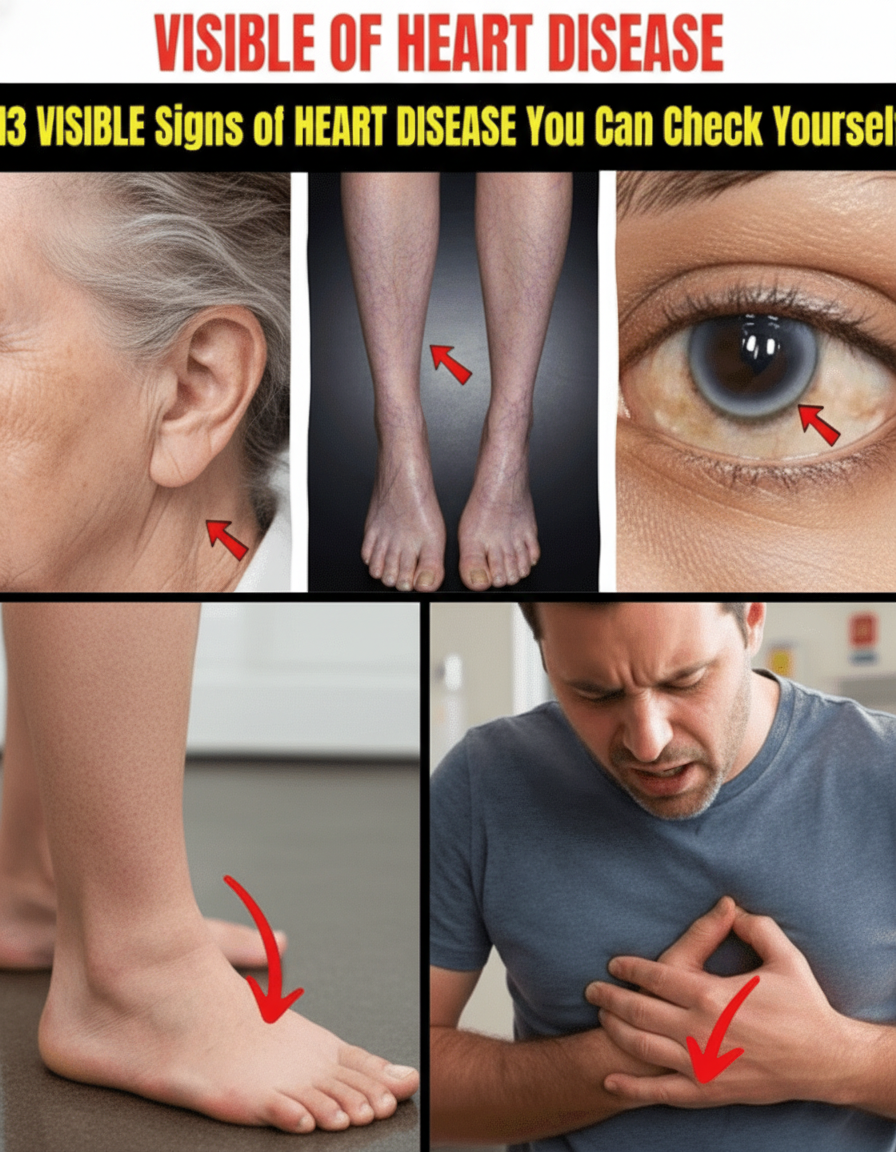
In well-lit conditions, inspect your eyes for a gray, white, or bluish ring encircling the iris, particularly if you notice it at a younger age. While often age-related, its premature appearance has been linked in studies to lipid disorders and increased cardiovascular risk. This sign is easily overlooked without purposeful examination. Now, let’s consider a quick clue visible in the grooming area.
Sign #10: Diagonal Crease Across the Earlobe (Frank’s Sign)
Gently run your finger across your earlobe. Look for a distinct diagonal crease extending from the edge of the ear canal towards the outer rim (distinct from sleep lines). Numerous studies have associated this specific crease with coronary artery disease, especially in individuals under 60 years old. It’s a rapid mirror check that many people tend to skip. The next visible sign manifests daily on your hands.
Sign #9: Finger Clubbing (Widened, Curved Nails)
Examine your fingertips: look for nails that curve downwards, resembling an inverted spoon, often accompanied by widened, shiny nail beds. This gradual alteration can be indicative of chronic low oxygen levels or underlying heart conditions, typically affecting both hands. While some might attribute it to manual labor, persistent cases are strongly linked to significant cardiovascular concerns. But wait—the next sign impacts your overall appearance.
Sign #8: Bluish or Grayish Tint to Lips, Skin, or Nails (Cyanosis)
Observe a subtle blue-gray discoloration on your lips, nail beds, or fingertips, especially noticeable in cold environments or during light physical activity. This tint signals reduced oxygen levels in the blood, potentially stemming from heart or circulatory problems. While more apparent on lighter skin tones, it’s a sign that can be checked at any time. Although cold weather is often blamed, ongoing changes in skin color warrant medical evaluation. Next, we explore a sign that can impact your mobility.
Sign #7: Hair Loss or Thinning on Lower Legs
Notice if the skin on your calves appears unusually smooth and shiny, with significantly less hair compared to your arms. Reduced blood circulation, often caused by the narrowing of arteries, can impair hair follicle health and skin condition. This change is gradual and sometimes affects only one leg. Frequently dismissed as a natural consequence of aging or genetics, studies link this specific pattern of hair loss to peripheral artery disease (PAD)—a critical indicator of broader heart disease risk. The following is