 By admin
 Do you ever feel like your skin is trying to tell you something? Perhaps it’s a sudden breakout, persistent redness, or unexplained tension that appears despite a consistent skincare regimen. These subtle shifts in your complexion can be puzzling, often leaving us wondering about the root cause. Many of us tend to overlook the profound impact of daily stressors, dietary choices, and lifestyle habits on our facial appearance, leading to a continuous cycle of concern about both our looks and our internal equilibrium. The exciting news is that facial reflexology provides a gentle yet powerful method for deciphering these messages. This comprehensive guide will introduce you to the intriguing facial reflexology map, revealing how specific areas of your face are intimately connected to various internal organs and bodily systems. Prepare to gain surprising new perspectives and discover simple, actionable steps for enhanced self-care in your daily life.
What is Facial Reflexology?
At its core, facial reflexology is a holistic practice rooted in ancient wisdom, positing the face as a dynamic “micro-map” that mirrors the entire human body. This fascinating discipline suggests that distinct zones across the forehead, cheeks, nose, chin, and other facial regions correspond directly to internal organs, glands, and bodily systems. The concept is akin to foot reflexology, where specific pressure points on the feet are linked to distant parts of the body.
This therapeutic approach draws heavily from rich traditions such as Vietnamese Dien Chan, a technique pioneered in the 1980s by Professor Bùi Quốc Châu, and incorporates principles from Chinese face reading (mien shiang). In these practices, subtle shifts and characteristics of the skin are interpreted as vital clues regarding internal energetic balance and overall health.
While facial reflexology is not presented as a diagnostic medical instrument, countless individuals find it immensely beneficial for fostering deep relaxation, alleviating tension, and cultivating heightened self-awareness. General research into reflexology, encompassing various facial techniques, indicates potential advantages such as enhanced localized circulation and significant stress reduction, often achieved through gentle, targeted massage. For instance, scientific studies on facial massage have demonstrated its capacity to boost blood flow to the skin, contributing to a more radiant and revitalized complexion. Yet, its potential benefits extend far beyond mere surface-level improvements.
Why Your Face Acts as a Messenger for Internal Balance
As the body’s largest organ, your skin possesses an incredible sensitivity, readily reflecting internal changes and imbalances. Factors such as insufficient sleep, digestive issues, or elevated emotional stress can manifest visibly on your complexion, often appearing as:
- Unexplained dryness or a lacklustre appearance
- Persistent breakouts concentrated in particular areas
- Noticeable tension or puffiness
These manifestations are rarely coincidental. Within the framework of facial reflexology, they serve as crucial invitations to pause, listen, and contemplate the underlying conditions within your body. Recognizing that your face can function as a subtle yet powerful indicator of your overall wellbeing is profoundly empowering. The true magic lies in this: by comprehending the intricate facial reflexology map, you gain the knowledge to respond proactively with targeted, accessible self-care practices.
Exploring the Facial Reflexology Map: Key Zones and Their Connections
Traditional facial reflexology charts meticulously divide the face into distinct zones, each holding potential connections to various bodily systems. While minor variations may exist across different holistic traditions, here’s a comprehensive overview of common associations:
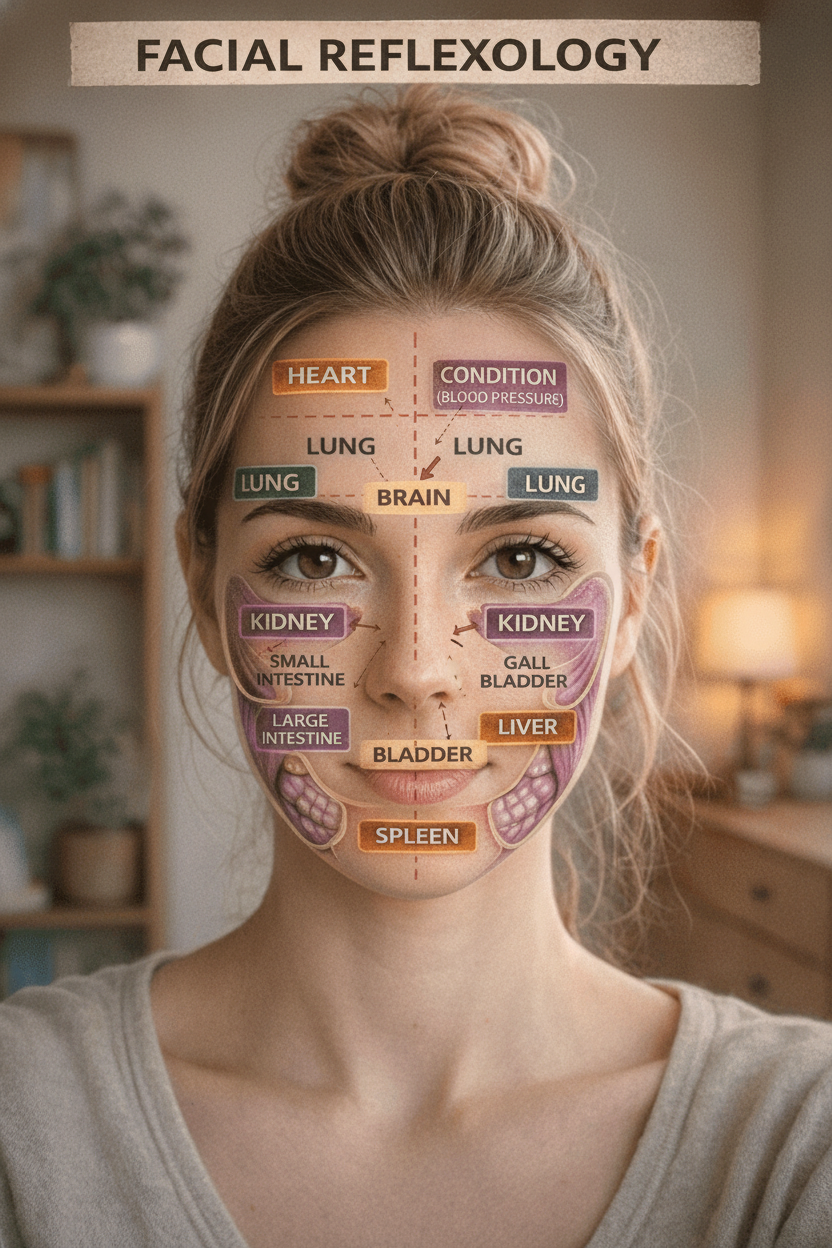
- Forehead Area: This expansive zone is frequently associated with the nervous system, the brain, and overall systemic balance, including aspects like blood pressure regulation. Persistent horizontal lines or feelings of tension here might suggest mental fatigue or cognitive overload.
- Between the Eyebrows and Upper Forehead: This specific region is often linked to the heart and the broader circulatory system, reflecting aspects of cardiovascular health.
- Cheeks (Upper and Mid): These areas are commonly connected to the lungs and the entire respiratory system. Interestingly, the left and right cheeks can sometimes mirror the condition of bilateral organs, such as the lungs or even the liver.
- Under-Eye and Cheek Zones: Often closely tied to the kidneys and bladder, this delicate area can reveal insights into hydration levels and the need for adequate rest through signs like puffiness or dark circles.
- Nose and Central Face: The central axis of the face, including the nose, is typically linked to the primary digestive organs, encompassing the small and large intestines, spleen, and stomach.
- Chin and Lower Face: This region frequently corresponds to the reproductive system and hormonal equilibrium. Additionally, some maps suggest connections to spleen and liver support.
Beyond these primary zones, many detailed charts further emphasize:
- Specific Liver zones located around the temples and the lateral aspects of the cheeks.
- The Gallbladder area often situated near the outer edges of the cheeks.
- The Brain represented along the central vertical line of the forehead.
These intricate mappings are the culmination of centuries of meticulous observation within diverse holistic health traditions. While it’s crucial to reiterate that these correlations are not scientifically validated for medical diagnosis, they serve as profound catalysts for proactive self-reflection and a deeper understanding of one’s internal landscape.
Quick Reference: Common Facial Zones at a Glance
To help you quickly grasp the core connections, here’s a simplified overview of common facial reflexology zones:
- Forehead → Brain & Nervous System
- Temples & Upper Cheeks → Liver
- Mid-Cheeks → Lungs
- Under Eyes → Kidneys
- Nose Bridge → Digestive Balance
- Chin → Reproductive & Hormonal Systems
- Central Vertical Line → Overall Balance (including Heart, Bladder, etc.)
This concise summary is designed to make it effortless for you to begin observing and understanding the subtle patterns your face might be revealing, without feeling overwhelmed.
How to Gently Explore Facial Reflexology at Home
Embarking on your facial reflexology journey doesn’t require specialized equipment or complex techniques. The essence of this practice lies in gentle touch, fostering deep relaxation, and cultivating heightened self-awareness. Here’s a simple, beginner-friendly routine to get you started:
- Prepare Your Space: Choose a tranquil environment where you won’t be disturbed. Ensure your hands are clean, and gently cleanse your face. Apply a light, natural moisturizer or facial oil to allow your fingers to glide smoothly across your skin without friction.
- Begin with Breath: Take a few deep, calming breaths to center yourself. This enhances the relaxation aspect of the practice.
- Light Touch Exploration: Using your fingertips, apply very light pressure in small, circular motions or gentle strokes across the different zones of your face. Pay attention to how each area feels. Are there any spots that feel particularly tender, tense, or different?
- Focus on Specific Zones: Based on the facial reflexology map you’ve learned, gently massage areas that correspond to any internal systems you wish to support. For instance, if you’re feeling mentally fatigued, spend a little more time with light strokes on your forehead.
- Listen to Your Body: This practice is about intuition. There’s no “right” or “wrong” way to feel. Simply observe and acknowledge the sensations.
- Conclude with Gratitude: Finish your session with a moment of gratitude for your body and its ability to communicate.
By integrating these simple steps into your routine, you can begin to unlock a deeper connection with your body’s innate wisdom, promoting not just a radiant complexion but also a profound sense of inner harmony and wellbeing. Remember, consistency and gentle attention are key to experiencing the full benefits of this beautiful self-care practice.